Businesses use machine learning (ML) to automate routine work, forecast demand, personalize what customers see, catch fraud and plan logistics. Adoption is now mainstream: Stanford’s 2026 AI Index reports that 88% of surveyed organizations used AI in at least one business function in 2025, up from 78% in 2024 according to the 2025 edition. This guide covers where ML is used, what it takes to run it, and the problems companies run into.
What Is Machine Learning in Business?
Machine learning uses algorithms that learn patterns from historical data and apply them to new data to make predictions or decisions. Unlike fixed rules written by hand, an ML model can be retrained as new data arrives, so its output can improve as the business collects more examples.
Explore top AI tools and trusted ML providers
How an ML Project Runs
| Stage | What happens |
|---|---|
| Data collection | Gather customer, transaction and behavioral data |
| Data processing | Clean, label and organize the data |
| Model training | Build and test predictive models |
| Deployment | Connect the model to business systems |
| Monitoring | Track accuracy and retrain as data changes |
Common Business Uses of Machine Learning

1. Process Automation
ML handles repetitive, high-volume tasks such as routing customer-service requests, extracting data from documents and classifying incoming tickets. The payoff is lower handling time and fewer manual errors.
2. Forecasting and Predictive Analytics
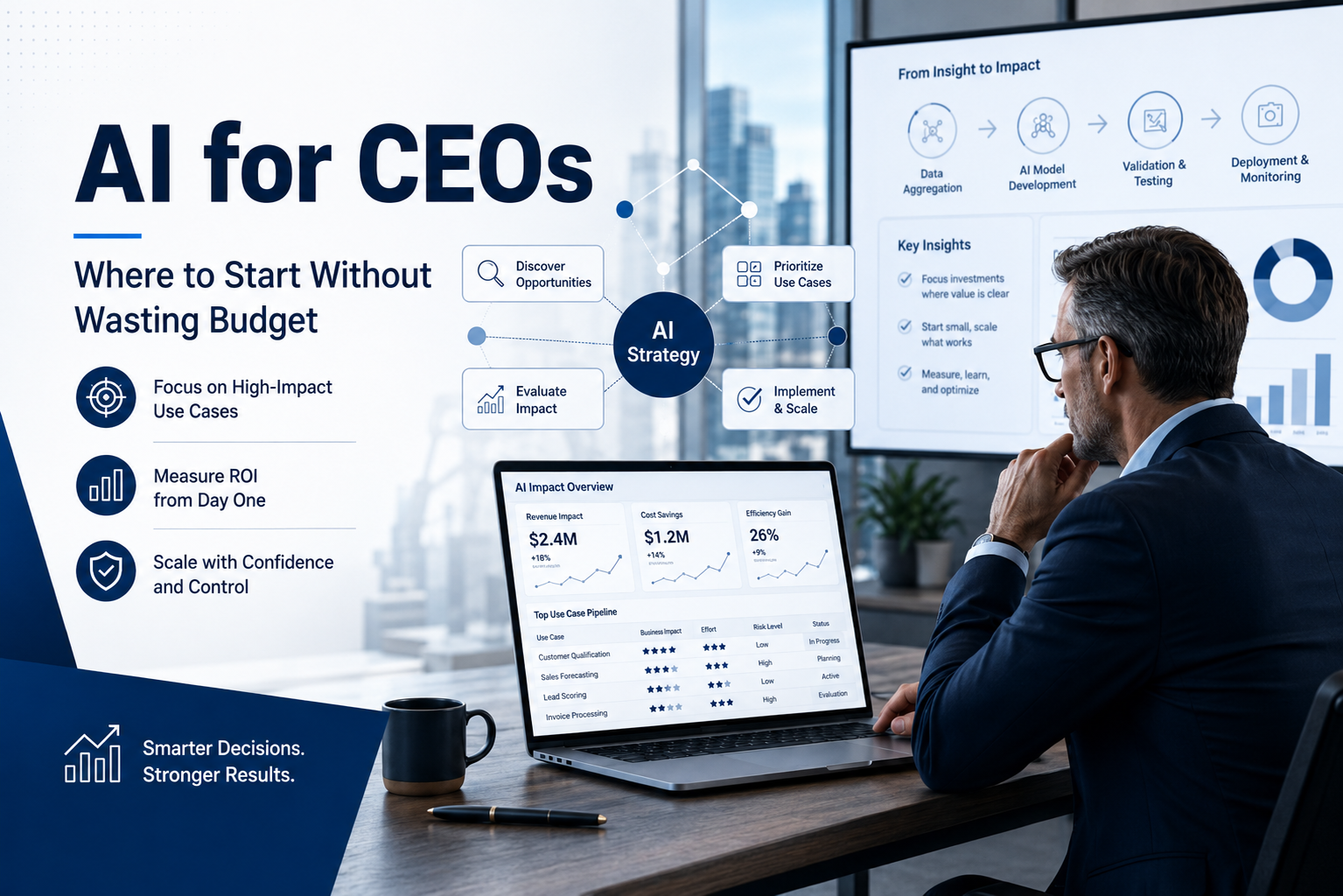
Models trained on historical sales, seasonality and external signals are used for sales and demand forecasting, customer churn prediction, risk analysis and inventory planning. Better forecasts mean less overstock, fewer stockouts and more realistic budgets.
3. Personalization
Recommendation engines, personalized emails and dynamic pricing all rely on ML. Netflix is the best-known example: its engineers reported in 2015 that recommendations influenced about 80% of hours streamed (2015) on the service.
4. Fraud Detection and Security
ML models flag transactions or logins that deviate from normal patterns. Payment platforms such as Stripe Radar evaluate transactions, accounts and customers in real time and assign a risk score that can block a payment or send it to manual review. The same approach is used for cybersecurity monitoring and identity verification.
5. Supply Chain and Route Optimization
Logistics companies combine optimization algorithms with predictive models to plan routes and delivery windows. UPS has said its ORION routing system was expected to cut 100 million miles and 10 million gallons of fuel a year once fully deployed in the United States.
6. ML Features Inside Products
Many products now ship with ML built in: voice assistants, recommendation panels, search ranking, image recognition and text generation. For software companies, these features are often the reason customers choose one product over another.
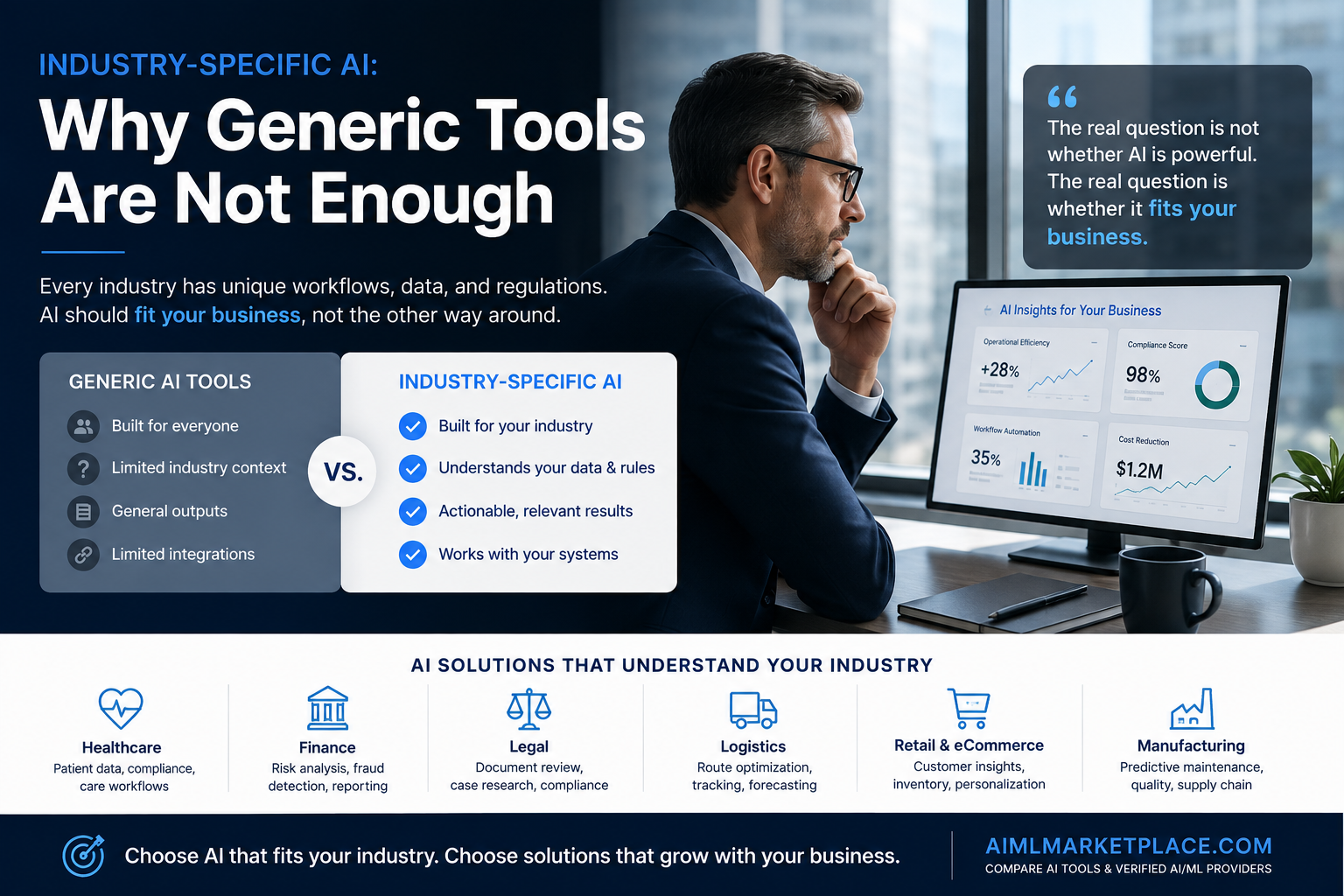
Machine Learning by Industry
| Industry | Typical ML uses |
|---|---|
| E-commerce | Product recommendations, customer analytics, dynamic pricing |
| Healthcare | Medical image analysis, risk prediction, drug discovery research |
| Finance | Fraud detection, credit scoring, algorithmic trading |
| Logistics | Route optimization, delivery forecasting, inventory management |
| Media and entertainment | Content recommendations, audience analysis, ad targeting |
Benefits and Challenges
Benefits
- Productivity: repetitive tasks are automated, freeing staff for work that needs judgment.
- Lower costs over time: better forecasts and fewer errors reduce waste.
- Better decisions: choices are based on patterns in data rather than guesswork.
- Scalability: a trained model can handle growing data volumes without a matching increase in headcount.
Challenges
- Data quality: incomplete or biased data produces unreliable predictions.
- Upfront investment: tools, infrastructure and expertise cost money before results appear.
- Skills: building and maintaining models requires data engineers and ML specialists, who are hard to hire.
- Integration: connecting models to existing systems and workflows is often the slowest part of a project.
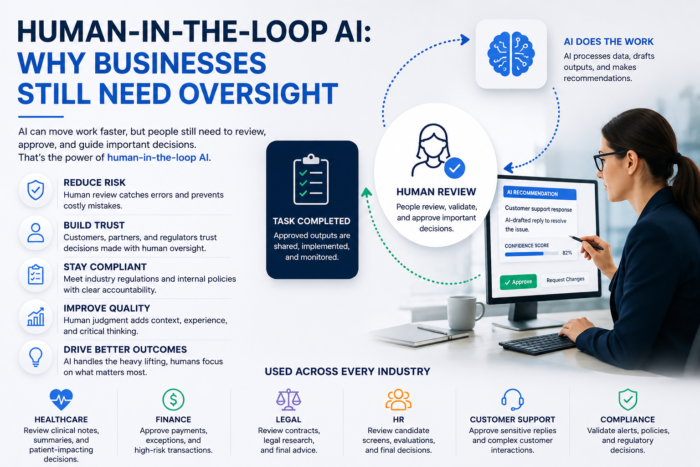
- Risk and governance: models can drift, make biased decisions or expose personal data. The NIST AI Risk Management Framework, a voluntary guide released in January 2023, is a practical starting point for managing these risks.
Who Should Use Machine Learning?
- Startups that need to scale operations without scaling headcount at the same rate.
- Enterprises looking to automate and optimize established processes.
- Software developers building ML features into their products.
- Marketing teams working on targeting and personalization.
What to Expect Next
- Lower costs: the AI Index found that the inference cost of a system performing at GPT-3.5 level fell more than 280-fold between November 2022 and October 2024, making ML features affordable for smaller companies.
- More autonomous systems: AI agents that carry out multi-step tasks with limited human input are moving from pilots into production workflows.
- More regulation: the EU AI Act entered into force on 1 August 2024, with its rules phasing in between 2025 and 2028. Companies selling into the EU need to check which obligations apply to their systems.
Machine learning is now a standard business tool rather than an experiment. Companies that start with a clear use case, good data and a plan for monitoring get the most out of it.
Ready to implement machine learning in your business?
Contact us today to get expert guidance and tailored AI solutions:
Frequently Asked Questions
Businesses use ML for automation, personalization, fraud detection, and predictive analytics.
eCommerce, healthcare, finance, logistics, and marketing are leading adopters.
Initial costs can be high, but long-term ROI is significant due to automation and efficiency.
Yes, with cloud-based tools and AI platforms, ML is accessible to startups and SMBs.
Improved efficiency, cost savings, better decisions, and scalability.
Written by: AIML Marketplace Team